
Psychological Therapy & Support
Specialist online psychological therapy for people aged 16+, particularly where difficulties overlap or previous therapy has not helped enough. Support for people helping someone they care about is also available through our dedicated Supporters page.

Where would you like to start?
Request an initial assessment ↓If you are considering therapy
When everyday life starts asking more than you can sustainably give.
Sometimes you know what has become difficult.
At other times, work, health, relationships and everyday responsibilities have become tangled enough that it can be hard to know where to begin.

How we work together
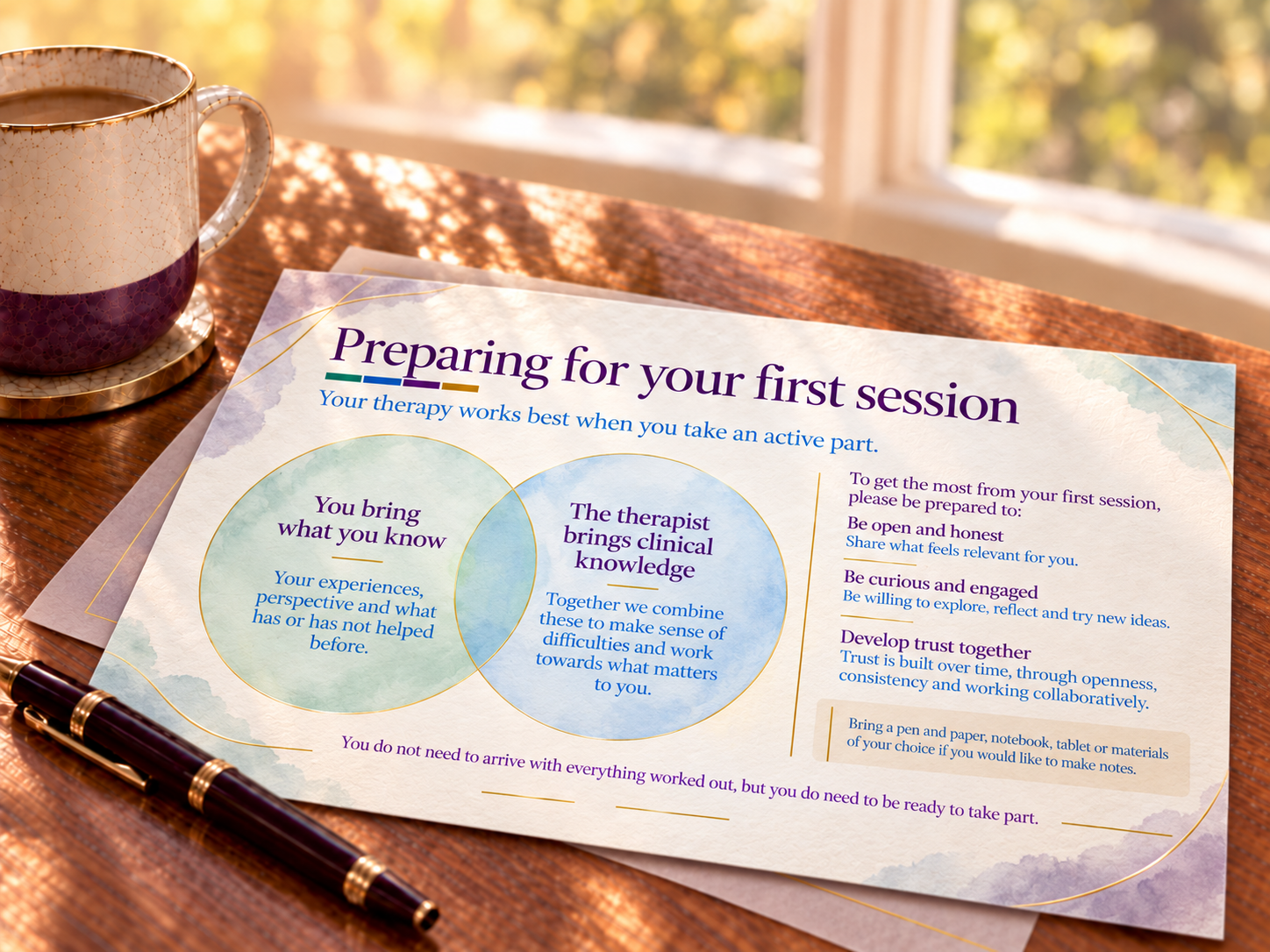
Bring what you know
Understand what matters
Act on what you learn
Review and adapt
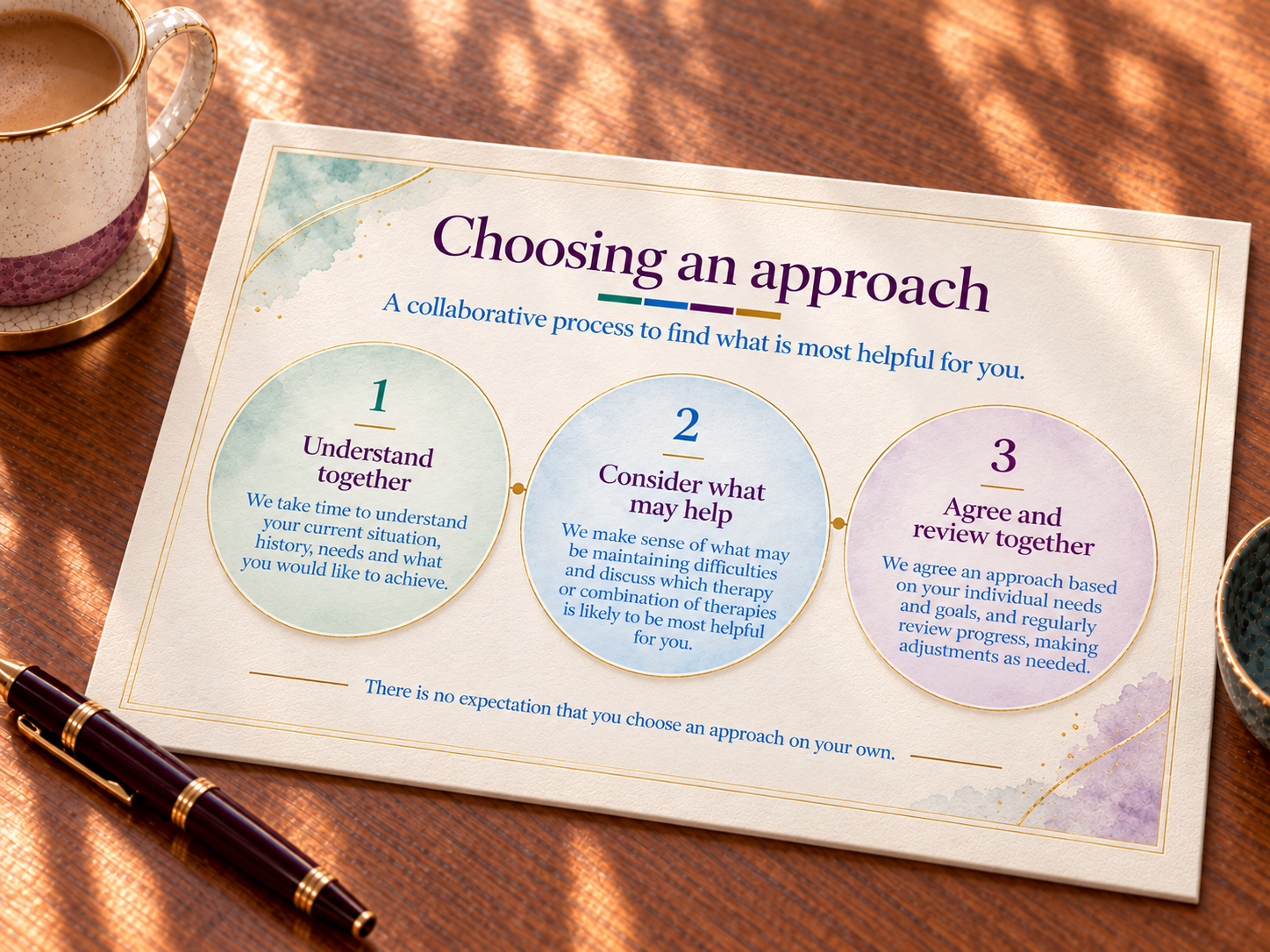
Developing a useful understanding
Assessment starts with your experiences and the circumstances affecting you. We use that understanding, alongside any diagnosis, to consider which approach could fit. Ēpiónē offers Cognitive Behavioural Therapy (CBT), Eye Movement Desensitisation and Reprocessing (EMDR), and the Maudsley Model of Anorexia Nervosa Treatment for Adults (MANTRA). We discuss suitability with you before agreeing how to proceed.

What we can help with
Complex trauma
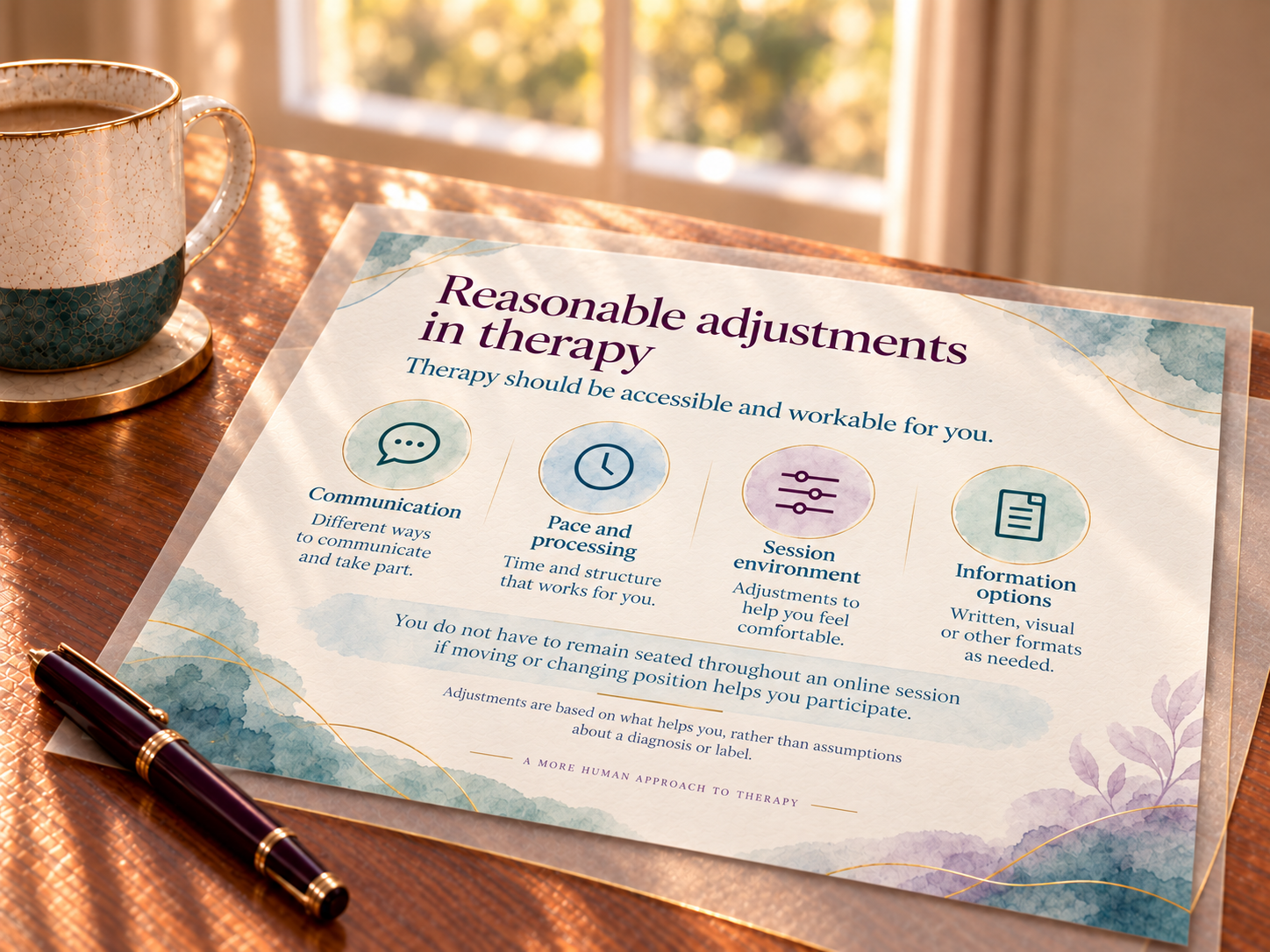
Neurodivergence-informed therapy
Mental health alongside physical health
Eating difficulties and other ways of coping
Work, relationships and changes in everyday life
When previous therapy has not helped enough
Who this work may be relevant to
Our work can be relevant across different communities and circumstances, including for neurodivergent people, LGBTQIA+ people, people living with long-term physical health conditions, and veterans.
Experiences and circumstances may overlap. We ask how any diagnosis or aspect of identity relates to your experiences, guided by what matters to you.
If you are here because you care about someone
When someone you care about is struggling, it can affect everyone around them.
You may notice changes in their confidence, participation or everyday life, while those around them become increasingly unsure what will offer help.
The work helps you understand your role and decide whether you want to do anything differently. The other person's autonomy remains important, as do the relationship and wider circumstances.

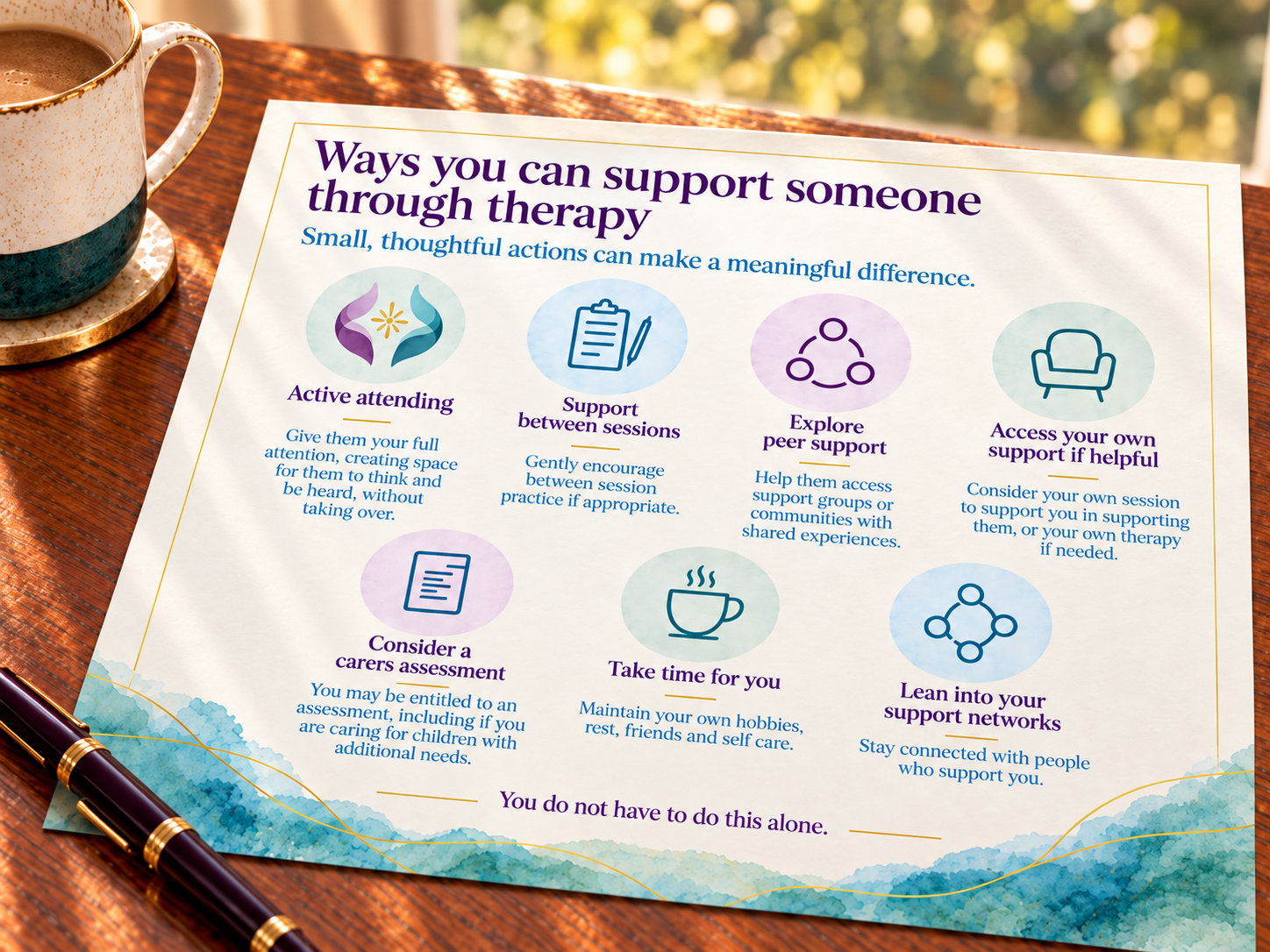
Look at what is within your influence
Look at how you respond and the boundaries you keep, then agree what, if anything, you are willing to do differently.
Their decisions about therapy and involvement remain theirs.
Think about what support is sustainable for you. You can then decide whether anything needs to change.
Consider the different factors that may be interacting and what may be influencing things now.
Consider how you can help while recognising your own limits, the relationship and the wider circumstances around them.
Clarity from the beginning
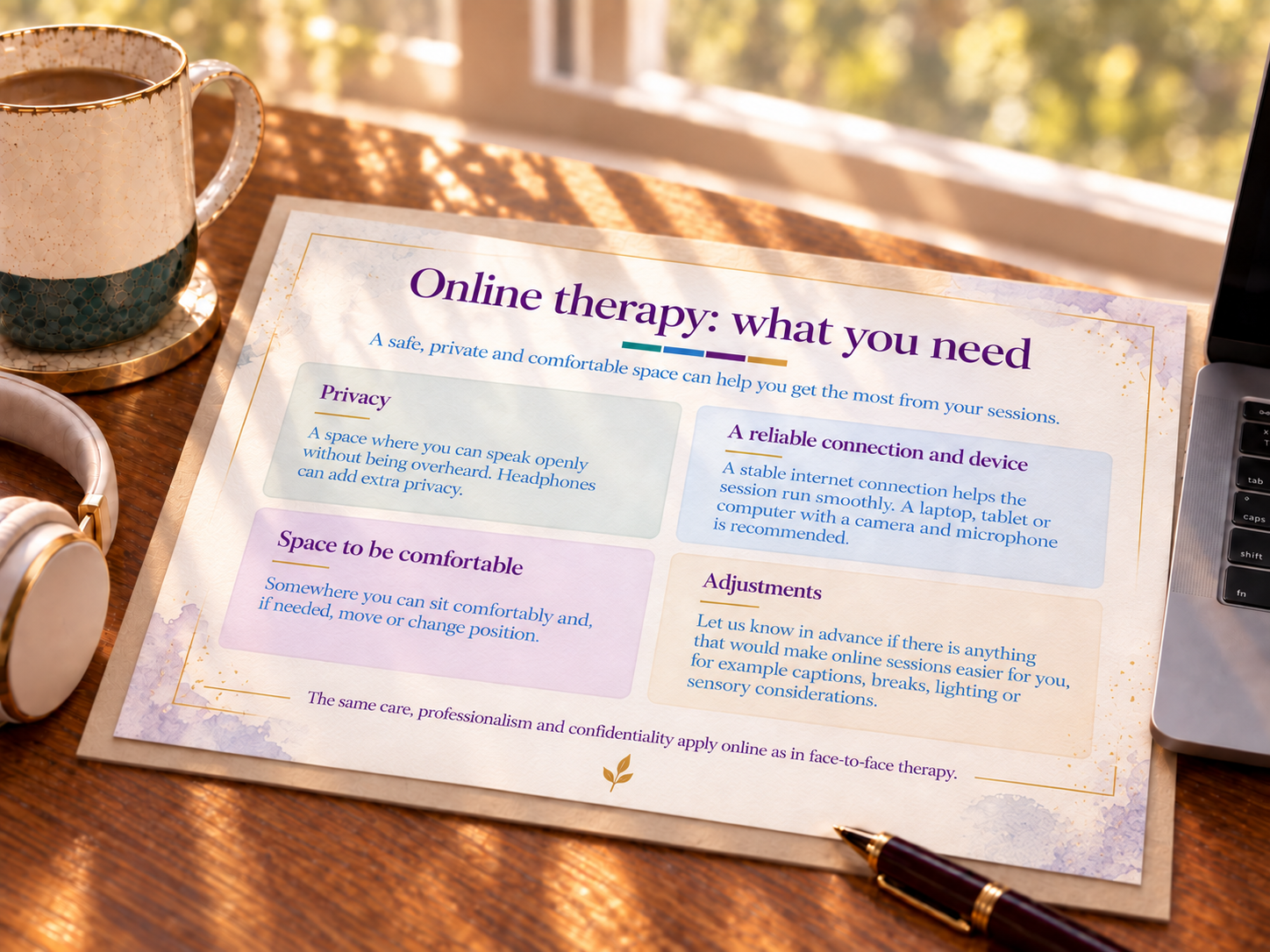
Privacy
Your therapy remains private. Information is shared only with your informed agreement, unless professional, safety or legal duties require otherwise.
Choice & suitability
We consider together whether the therapy, timing and resources around the work are a good fit. If another level of care may be more appropriate, we will explain that clearly and discuss what that means with you.
Continuity & review
Where continuing together remains appropriate, you work with the same clinician. We review the work regularly and adapt when useful.
Practical arrangements
Therapy is available to people paying for their own sessions or using eligible WPA cover. WPA is the only private medical insurer we accept. We explain fees, advance payment and cancellation terms before booking.
Find out more about WPA cover →Payment and cancellation details
Please check your cover and any authorisation requirements with WPA before booking. For self-funded appointments, payment is due at least 24 hours before the session. Cancellation requires at least 24 hours’ notice until 31 December 2026 and at least 48 hours from 1 January 2027. Late cancellation or non-attendance is payable at the full session fee under the agreed terms. The therapy agreement explains the full arrangements.
For details of practitioner experience and ongoing professional development, see our qualifications and professional standards.
Experiences shared by people we have worked with
Selected extracts from feedback shared with permission. Each account reflects one person’s experience.
Getting started
When difficulties keep shaping what you can do, you may find yourself postponing things you care about. If nothing changes, more time may pass with those opportunities still out of reach. What could become possible if those limits began to shift? Request an initial assessment to explore whether specialist psychological therapy could help you work towards change. The self-referral form opens on a separate website. After you submit it, we will contact you about the next step and arrange any assessment or appointment separately. You can also email a question first. We aim to respond to enquiries within 48 hours and explain the next step. Fees are provided before booking.
Please use the self-referral form for personal health information. Email is for general questions.