
Clinical Supervision & Specialist Consultation
Specialist online clinical supervision for practitioners
Clinical supervision can offer experienced practitioners thoughtful challenge that is sometimes harder to find. Our supervision draws on 16 years of experience across NHS services and independent practice, including work with complex clinical presentations.
This experience is supported by supervision training through the University of Exeter's NHS Talking Therapies programme and the British Psychological Society.
Focused specialist consultation
For qualified practitioners who already have appropriate supervision and want to explore a clinical scenario in greater depth.
Enquire about specialist consultation
On this page
When the work is asking more of your thinking
A fresh clinical conversation can help you notice assumptions and reconsider an established view.
When supervision may help
- Cases are becoming more complex
- Progress has stalled or the formulation needs rethinking
- Current supervision feels too routine or managerial
What you can expect
- Time to examine clinical decisions beyond a case update.
- A supervisor who can test assumptions and consider alternatives.
- A relationship that can work alongside experience while still extending it.
Focused consultation may fit alongside this
If you already have appropriate supervision and want another perspective on a particular clinical decision, focused consultation offers a separate conversation alongside your existing supervision. The section below explains the offer.
What supervision can offer
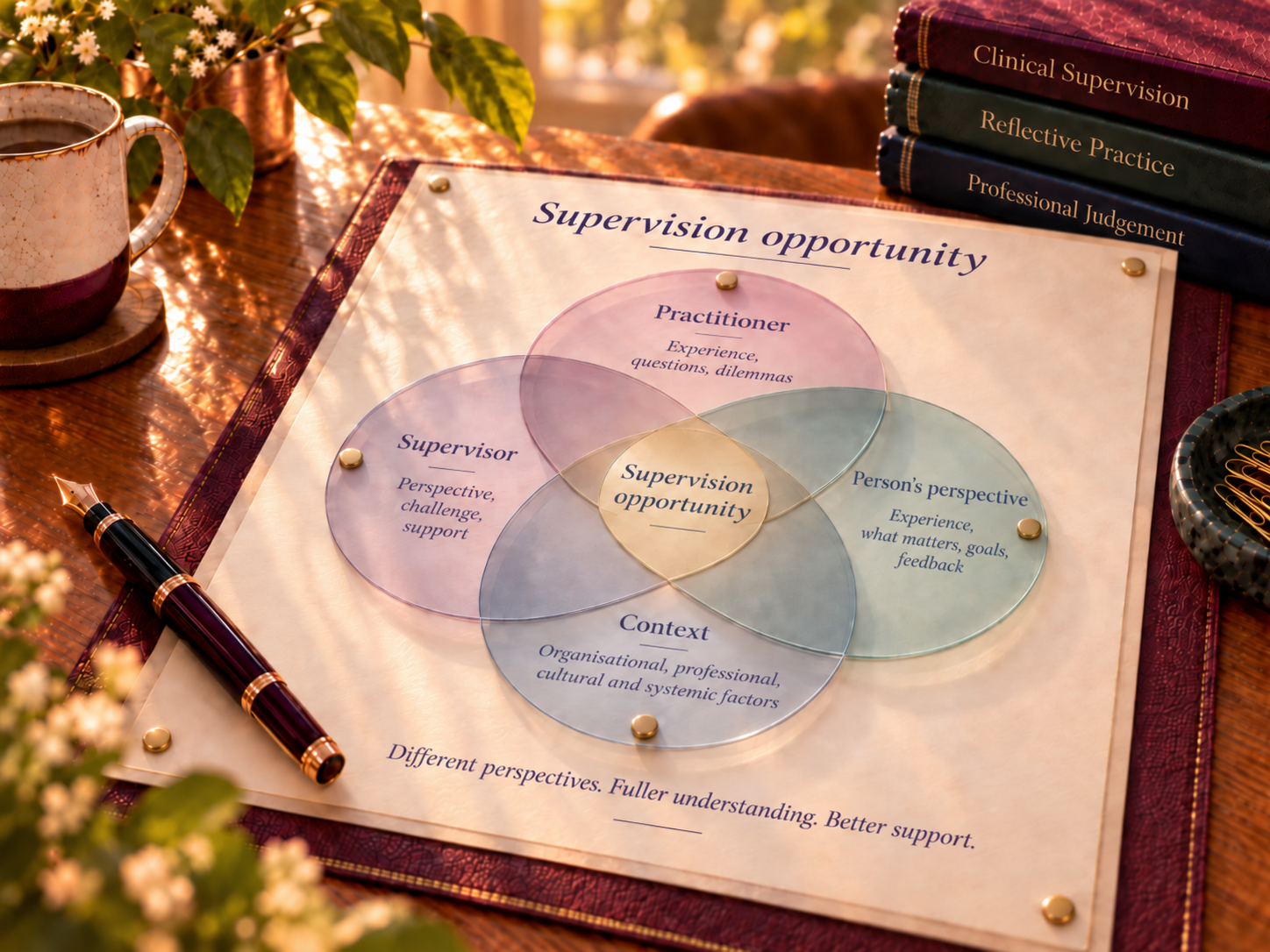
From uncertainty back to practice
Supervision helps you test your formulation and examine other possibilities. The aim is to return to practice with a clearer rationale for what you decide to do next.
Areas often brought to supervision
These are areas that may enter the work. They do not imply that one supervisor or consultant replaces the expertise of every relevant discipline.
Focused Specialist Consultation
A focused conversation about a clinical question that needs closer examination.
What it is
- Focused input around a particular clinical question or case, alongside your existing supervision.
- Consultation can be a single conversation or a short sequence in which you review decisions and their impact.
What you might bring
- What else might help me understand this clinical scenario?
- Should I continue, adapt, sequence differently, seek another opinion or refer?
Adaptation without treatment drift
The question is how to adapt treatment to the person while retaining the active ingredients and therapeutic mechanisms that make it effective. Accessibility and personalisation remain central to that judgement.
Fit and boundaries
Focused consultation
Focused consultation supports a specific decision while existing supervision retains the wider remit.
Where focused consultation fits
Focused consultation offers an additional perspective alongside existing supervision. Any BABCP or other professional supervision requirements, including EMDR Consultant supervision where applicable, continue to apply. Specialist medical or allied professional input, employer governance, personal therapy and occupational health have their own roles.
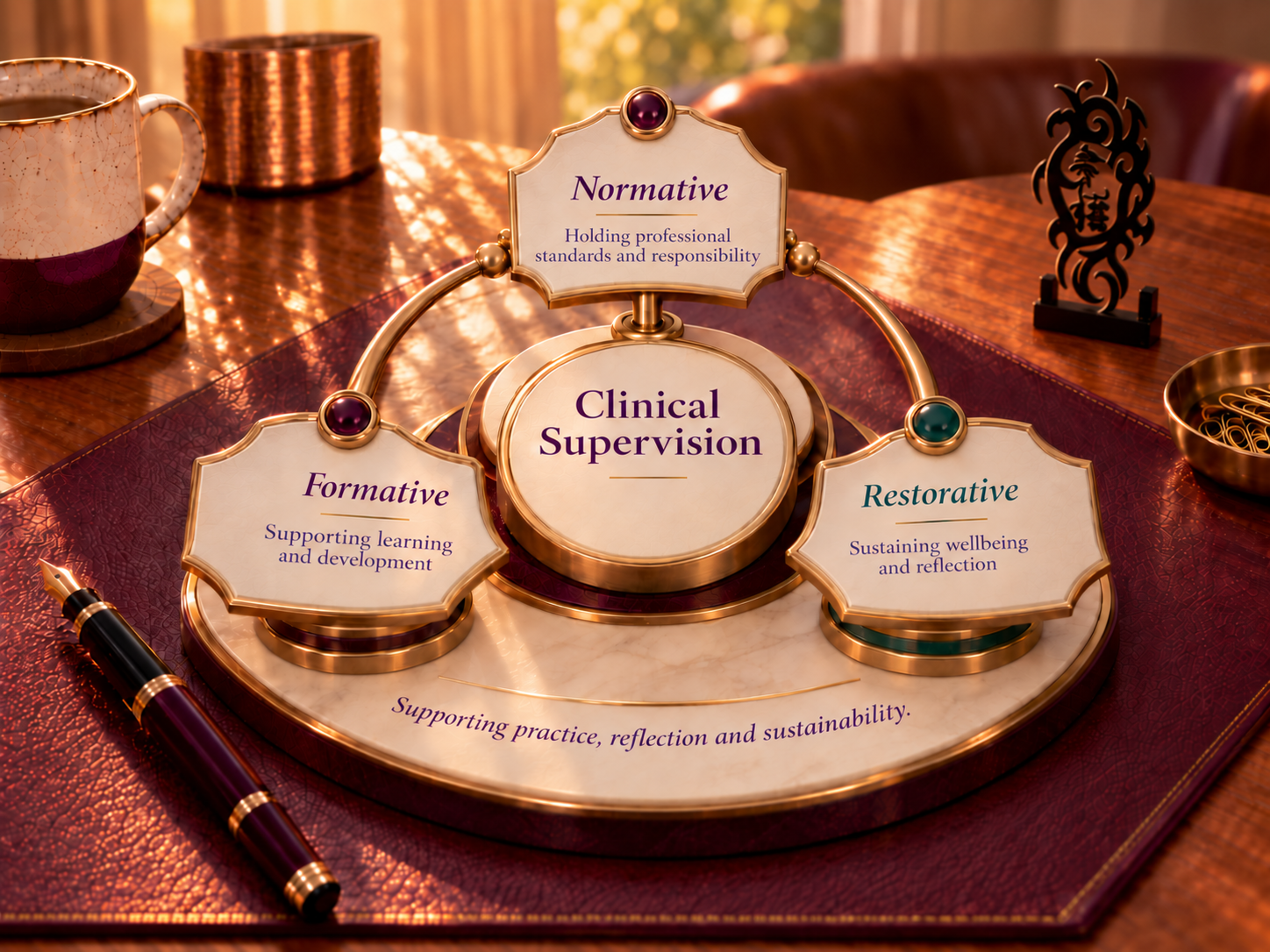
How we approach supervision
We examine the clinical question together and follow the evidence. The discussion remains grounded in professional responsibilities.
Reflective
Notice how your assumptions and responses may be influencing the work.
Formulation-led
A shared clinical map that can hold interacting processes.
Thoughtful challenge
Question assumptions and examine alternative explanations.
Development-focused
Use what you learn in supervision to inform clinical decisions.
How we work together
Both practitioner and supervisor bring their own experiences and assumptions to the work. Reflecting on these perspectives together helps us recognise where they strengthen clinical judgement and where they may obscure something important.
Humour and playfulness can also help us look at familiar clinical situations differently.
When your response becomes part of the question
Our responses to clinical work can offer useful information when we explore what might be influencing them.
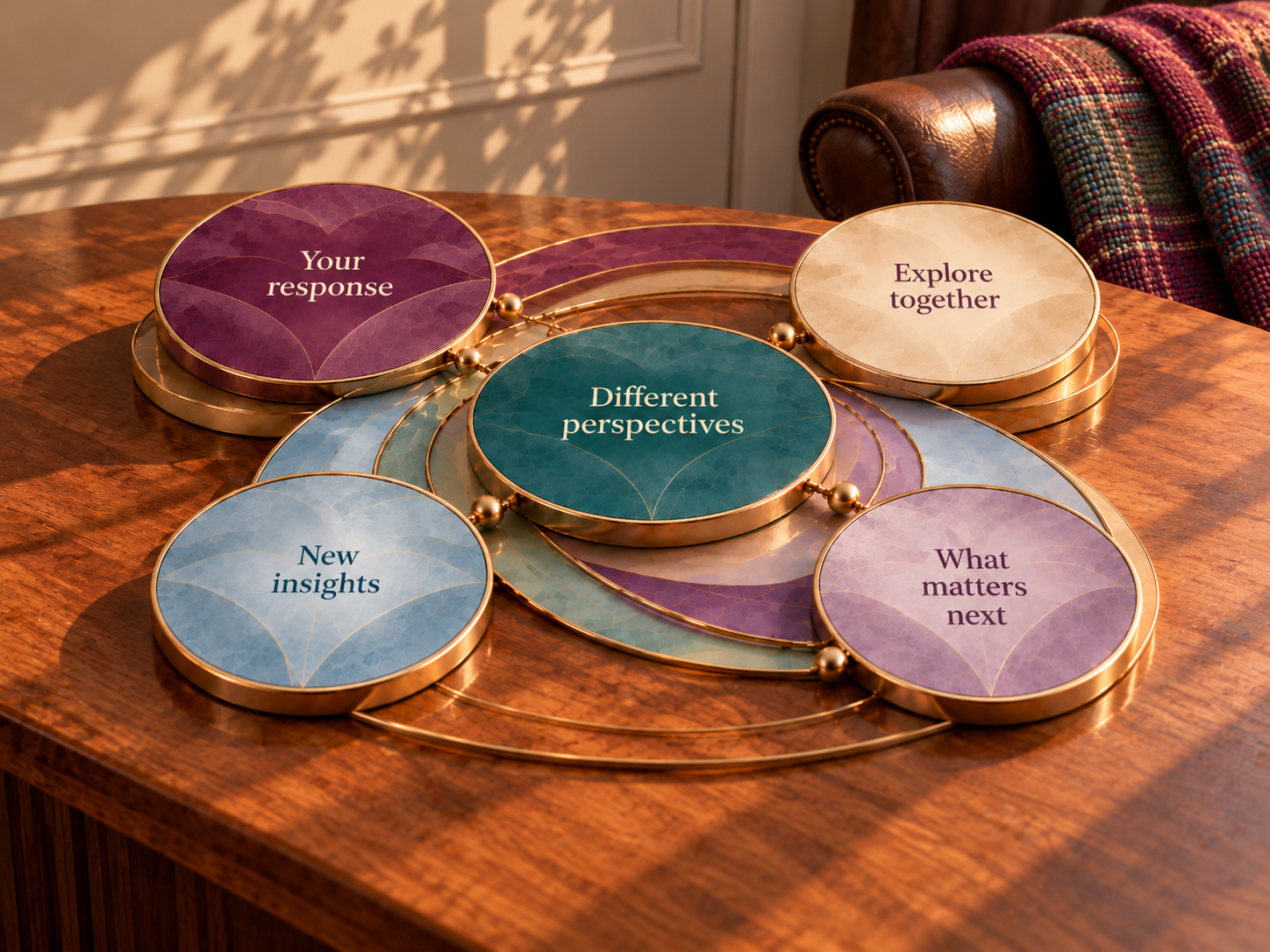
Think before interpreting
A strong response can have more than one plausible explanation.
- It may reflect the therapy relationship, accumulated demands, system pressure, a competence gap or personal circumstances.
- Formulate the response before deciding what it means.
- Supervision may help; sometimes specialist input, personal support or changes to work design are more appropriate.
Bring what is difficult to say
Uncertainty has a place in supervision, whatever your experience.
Openness and thoughtful challenge
We make space for uncertainty and differing views, including feedback about the supervision itself. We approach these conversations with curiosity and respect, recognising that trust develops through how we work together.
The work around the work
Clinical decisions can be affected by pressures beyond the treatment itself.
Practice context matters
Caseload design, role clarity, available support, professional isolation, funding and organisational expectations can affect clinical decisions.
- Constraints differ across NHS, independent, mixed, insurer-funded and provider-network work.
- We can distinguish clinical recommendations from what a service or payer can authorise.
- Work-design problems need a system response, rather than an expectation that practitioners simply tolerate them.
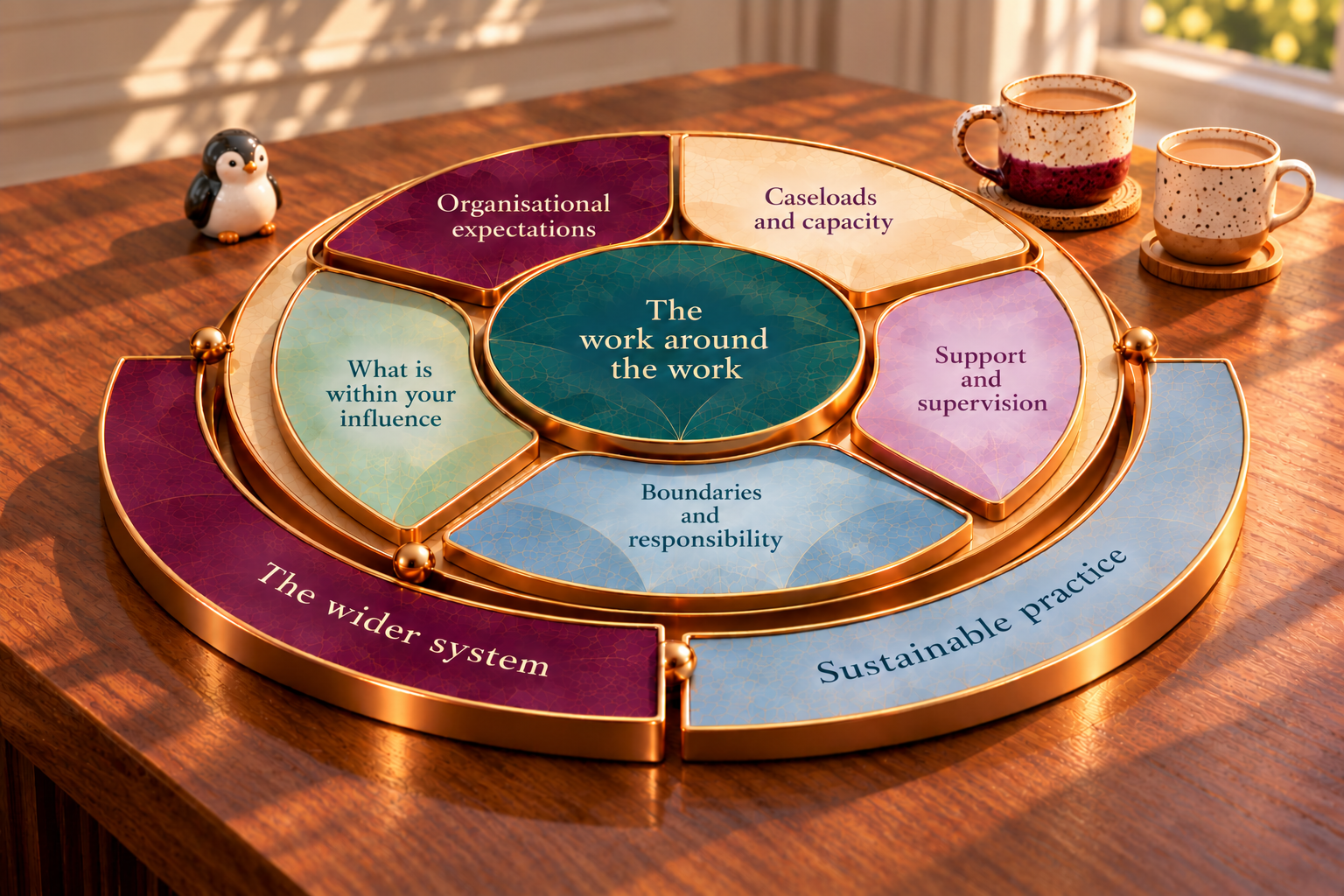
Where responsibility sits
Complex work can blur where responsibility sits.
- We can clarify the responsibilities of the practitioner, the person receiving therapy, other professionals and the wider system.
- Accurate boundaries preserve appropriate clinical responsibility.
- Supervision can clarify system problems but cannot replace management, governance or service action.
When the work is personally or culturally resonant
Shared culture, community, identity or lived experience can enrich understanding. Repeated exposure to traumatic material can also affect practitioners, even when the work remains within their clinical competence.
Clinical supervision: suitability and arrangements
Who this is for
Qualified CBT therapists, psychologists, psychotherapists, counsellors and other appropriate practitioners.
Fees, bookings and cancellations
Fee information is provided before booking. Payment is due at least 24 hours before an appointment. Please give 48 hours’ notice to cancel or rearrange. Later cancellations are charged in full. Non-payment does not count as cancellation. Terms are provided before supervision begins.
Scope
Supervision is offered within Ēpiónē’s clinical competence and supervisory remit.
Supervision is available individually or in groups of up to four practitioners.
Developmental supervision
The work is designed to develop clinical thinking through reflection and formulation. If the main need is administrative sign-off or formal authority for accreditation or training, another arrangement may fit better.
For details of practitioner experience and ongoing professional development, see our qualifications and professional standards.
What practitioners have shared
Selected extracts from feedback shared with permission. Each account reflects one person’s experience.
Getting started
When the same clinical question keeps returning, staying with a familiar formulation may mean missing an opportunity to adjust the work. The next decision still needs to be made, even when uncertainty remains.
What might a fresh perspective allow you to see before you make it?
Bring the question into supervision to test your reasoning and decide what to do differently in practice.
Ongoing clinical supervision
Email Ēpiónē a brief outline of your clinical work and what you would like to explore in supervision.
We can discuss whether ongoing supervision would fit your needs and the work involved.
Focused specialist consultation
If you already have supervision and a scenario you would like to explore in greater depth, email Ēpiónē a brief outline of the clinical question and what your current supervision covers.
We can consider whether a single consultation or short sequence would fit, and whether another specialist is more appropriate.
Please leave out details that could identify a client. We can agree how to share further information if needed.